Showing posts with label US Political Parties. Show all posts

Thursday, May 23, 2024

Independent Voices: A Look at Notable Independent Candidates in U.S. Politics


In a political landscape often dominated by the two major parties, independent candidates emerge as powerful voices of dissent, offering alternative solutions and perspectives. This article explores the history, platforms, and notable election victories of important independent candidates in the United States, along with relevant quotes that capture their spirit.

A Historical Overview:

Independent candidates in the United States have played a crucial role in challenging the status quo and promoting alternative visions for the country. While there have been numerous independent candidates over the years, we will focus on some of the most influential ones.

Platform:

Independent candidates often run on a diverse range of platforms and ideologies, reflecting the diversity of views in American politics. However, they tend to emphasize common themes:

  1. Anti-Establishment: Independents often position themselves as anti-establishment candidates, promising to break free from the influence of the two major parties.

  2. Pragmatism: Many independents advocate for practical, solutions-oriented governance that transcends partisan gridlock.

  3. Fiscal Responsibility: A commitment to fiscal responsibility and balanced budgets is a common theme among independent candidates.

Notable Election Victories:

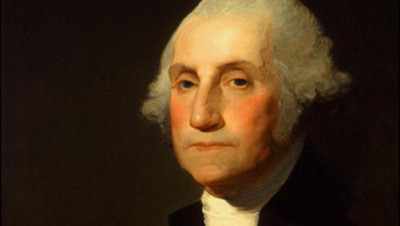
  1. George Washington (1789 and 1792): George Washington, the nation's first president, ran as an independent candidate, unaffiliated with any political party. His unanimous election in 1789 and subsequent victory in 1792 set a precedent for independent leadership.

"I hope I shall possess firmness and virtue enough to maintain what I consider the most enviable of all titles, the character of an honest man." — George Washington.

  1. Ross Perot (1992): Ross Perot, a self-made billionaire, ran as an independent candidate in the 1992 presidential election. He focused on issues such as reducing the national debt, government reform, and trade.

"The budget should be balanced, the treasury should be refilled, the public debt should be reduced and the arrogance of public officials should be controlled." — Ross Perot.

  1. Bernie Sanders (2016 and 2020): Bernie Sanders primarily identifies as a Democratic Socialist and has served as an Independent U.S. Senator from Vermont.

"It is time we had democratic socialism for working families, not just Wall Street billionaires." — Bernie Sanders.

Relevance and Influence:

Independent candidates often serve as a reminder of the importance of alternative voices in American politics. While they may not always win elections, their campaigns can push major parties to address pressing issues and adopt new policies.

Independent candidates have a long and storied history in American politics. They challenge the status quo, bring unique perspectives to the national conversation, and sometimes achieve significant electoral success. While the road to victory as an independent candidate can be challenging, their campaigns often leave a lasting impact on the political landscape and the policies pursued by major parties.

Tuesday, April 23, 2024

The Constitution Party in America: A Beacon of Constitutional Conservatism


In the tapestry of American politics, third parties often rise to champion specific ideologies and principles. The Constitution Party, founded on a staunch commitment to constitutional conservatism, stands as a distinctive force in the political landscape.

A Historical Overview:

The Constitution Party, formerly known as the U.S. Taxpayers' Party, was founded in 1992 by a group of conservative activists who believed that the Republican and Democratic parties had strayed from constitutional principles. The party's foundational belief is that the U.S. Constitution provides a framework for limited government and individual liberty.

"The Constitution Party, as a matter of principle, advocates a federal government that is constitutionally limited to a few defined functions and has a high regard for the balance of powers as established by the Founders." — Constitution Party National Platform.

Platform:

Constitutional Governance: The Constitution Party advocates for a strict interpretation of the U.S. Constitution and believes that the federal government should adhere to its enumerated powers.

Limited Government: The party seeks to reduce the size and scope of the federal government, promote fiscal responsibility, and limit government intrusion into citizens' lives.

Pro-Life: The Constitution Party is staunchly pro-life and opposes abortion.

States' Rights: Emphasizing the principle of federalism, the party supports the devolution of power to state and local governments.

Second Amendment: The Constitution Party is a strong supporter of the Second Amendment and the right to bear arms.

Notable Election Victories:

Michael Peroutka (2004): Michael Peroutka, running as the Constitution Party's presidential candidate in 2004, garnered significant attention and support from constitutional conservatives. "We hold that the time has come for a new, genuinely 'second' party, conceived in liberty and dedicated to the proposition that there is no freedom without respect for law." — Michael Peroutka, Constitution Party Presidential Candidate, 2004.

Elected Officials: While the Constitution Party has not achieved widespread electoral success, it has had some success at the local and state levels, with elected officials holding various positions across the country.

Relevance and Influence:

The Constitution Party remains relevant as a voice for constitutional conservatism and limited government in American politics. While it has not won major national elections, its platform attracts individuals who prioritize strict adherence to the Constitution and the protection of individual rights. "We are not extremists. We are mainstream Americans. We believe our Founding Fathers got it right, that the Constitution is not a 'living, breathing document.' It is, as they said, a contract." — Darrell Castle, Constitution Party Presidential Candidate, 2016.

The Constitution Party's history is rooted in a deep commitment to constitutional principles and limited goveolitics continue to evolve, the Constitution Party remains a steadfast advocate for its vision of constitutrnment. Its influence may not be as visible as that of the major parties, but it serves as a vital reminder of the importance of adhering to the constitutional framework that underpins American democracy. As American politics continue to evolve, the Constitution Party remains a steadfast advocate for its vision of constitutional conservatism.

Thursday, March 28, 2024

Breaking Free from Political Manipulation: Non-Partisan Elections and the Demise of Gerrymandering


In the intricate dance of democracy, one of the most nefarious partners to emerge in recent centuries is gerrymandering. Picture this: a shadowy figure, wielding a pen instead of a sword, drawing lines on a map with the precision of a surgeon. These lines, innocent in appearance, wield immense power, shaping the destiny of communities, dictating the course of elections, and distorting the voice of the people. But what if I told you there's a way to cut this puppeteer's strings and reclaim the true spirit of democracy? Enter non-partisan elections.

Gerrymandering, the practice of manipulating electoral district boundaries to favor one political party over another, has plagued democratic systems worldwide. But its roots in the United States run deep, like a stubborn weed entwined in the very fabric of our political landscape. Named after Governor Elbridge Gerry of Massachusetts, who approved a salamander-shaped district in 1812 to benefit his party, gerrymandering has evolved into a sophisticated tool for incumbents and political elites to maintain their grip on power.

But here's the twist: gerrymandering thrives on partisanship. It feeds on the toxic brew of party politics, where loyalty to the red or blue trumps allegiance to the people. Remove this toxic ingredient, and suddenly, gerrymandering loses its grip.

Enter non-partisan elections. In a non-partisan system, candidates run for office without party affiliation, and political parties are prohibited from officially participating in the electoral process. Sounds like a pipe dream? Think again. Imagine a ballot devoid of party logos, where candidates stand on their own merits rather than riding the coattails of a partisan label. It's a revolutionary concept, one that promises to reshape the landscape of democracy.

But wait, there's more. Non-partisan elections aren't just a fancy theoretical construct; they're grounded in the wisdom of the Founding Fathers themselves. Cast your mind back to the days of yore, when the ink on the Declaration of Independence was still fresh. James Madison, the architect of the Constitution, warned against the perils of factions in Federalist No. 10. He foresaw a future where partisan strife would tear the nation asunder, where allegiance to party would trump loyalty to country.

And let's not forget George Washington's prophetic farewell address, where he cautioned against the "baneful effects of the spirit of party." He warned that political factions would undermine the very foundations of democracy, sowing discord and eroding trust in government.

Fast forward to the present day, and it's clear that the Founding Fathers' warnings were not in vain. Partisan gridlock paralyzes Congress, ideological warfare rages across social media platforms, and gerrymandered districts resemble abstract art more than fair representation.

But fear not, for there is hope on the horizon. Non-partisan elections offer a beacon of light in the fog of political warfare. By divorcing candidates from party affiliations, we strip gerrymandering of its power source. Suddenly, drawing district boundaries becomes less about stacking the deck in favor of one party and more about ensuring fair representation for all.

Of course, implementing non-partisan elections won't be easy. It requires a fundamental shift in mindset, a willingness to put country above party and principle above politics. But if the Founding Fathers could defy the odds and birth a nation founded on the principles of liberty and justice, then surely we can rise to the challenge of reclaiming our democracy from the clutches of gerrymandering.

So let us raise our voices in unison, not as Democrats or Republicans, but as citizens united in our quest for a more perfect union. Let us tear down the walls of partisanship and build bridges of cooperation. And together, let us usher in a new era of democracy, where the will of the people reigns supreme and gerrymandering is but a relic of the past.

Tuesday, March 12, 2024

The American Independent Party: A History of Dissent and Political Platform


In the mosaic of American politics, third parties have often emerged as voices of dissent and alternatives to the status quo. The American Independent Party (AIP) is one such party with a unique history and a platform that reflects its ideological stance.


A Historical Overview:

The American Independent Party, www.aipca.org, traces its roots back to 1967 when it was founded by Bill Shearer, a conservative California politician, and George Wallace, a former governor of Alabama. The party emerged as a vehicle for Wallace's presidential campaign in 1968, marked by his staunch opposition to desegregation and strong conservative values. "We are the alternative to the Tweedledum and Tweedledee of the two major parties." — George Wallace, 1968 Presidential Campaign.

Platform:

Conservatism: The American Independent Party embraces a conservative platform, advocating for limited government intervention, individual liberty, and traditional values.

Anti-Immigration: The party has historically taken a hardline stance on immigration, emphasizing border security and opposing amnesty for undocumented immigrants.

States' Rights: AIP emphasizes the importance of states' rights and decentralization of government power, seeking to limit federal authority.

Anti-Abortion: The party has consistently opposed abortion and supported pro-life policies.

Second Amendment: AIP strongly supports the Second Amendment and the right to bear arms.

Notable Election Victories:

George Wallace (1968): George Wallace, running as the American Independent Party's presidential candidate in 1968, won five southern states and secured 13.5% of the popular vote, making a significant impact on the election.

Lester Maddox (1970): Lester Maddox, an AIP candidate, was elected as the Governor of Georgia in 1966, marking a notable victory for the party.

Electoral Impact: Although the American Independent Party has not achieved a presidential victory, it has occasionally garnered electoral support at the state and local levels, particularly in conservative-leaning regions.

Relevance and Influence:

The American Independent Party remains relevant in American politics as a symbol of staunch conservatism and a voice for those who advocate for limited government and traditional values. While it may not have consistently won major elections, its platform continues to attract individuals who align with its principles. "We are not a pressure group, we are a political party. We do not want any part of the Republican or Democratic parties. We put the Constitution of the United States first and will not sell it out for party gain." — American Independent Party Official Statement.

The American Independent Party has a unique history rooted in conservative values and a platform that reflects its commitment to limited government and traditional principles. Its influence has been felt in various elections, particularly in regions where conservative ideals resonate with voters. As American politics evolve, the AIP remains a distinctive voice in the political landscape, championing its vision for the country.

User
You

ARE YOU A CONSCIOUS CONSERVATIVE?

  You may be A Conscious Conservative if you believe: No person or government has a right to take or use a person's property without t...