Friday, May 24, 2024

United We Stand: Federalist Paper #5 Argues for a Strong Union to Ensure Peace and Prosperity


Federalist Paper #5, authored by John Jay, is another crucial contribution to the Federalist Papers series, which sought to persuade the American people to ratify the United States Constitution. In this article, we explore the key arguments presented in Federalist Paper #5, which underline the importance of a strong federal union in maintaining peace and fostering economic prosperity in the young United States.

Unity for the Preservation of Peace: Jay stresses the role of unity in preventing internal conflicts and external threats: "The neighboring powers, as has been shown, could not well avoid being competitors for traffic and trade. To avoid this competition, it was necessary for each to be able to supply its citizens with as many conveniences as possible, at the cheapest rate."

Jay argues that a united nation is essential to maintaining peace and preventing conflicts between neighboring states. Economic competition can lead to tensions, but a strong federal government can regulate and balance trade relationships.

The Impact of Division on Prosperity: Jay highlights the economic consequences of disunity: "Should the people of America divide themselves into three or four nations, would not the same degree of animosity prevail between them? Would not similar jealousies arise, and be in like manner cherished?"

This quote underscores the idea that division among the states would lead to economic competition, jealousy, and animosity, hindering the nation's prosperity.

Benefits of Commerce and Economic Growth: Jay emphasizes the advantages of a united nation for commerce and economic development: "Commercial republics, like ours, will never be disposed to waste themselves in ruinous contentions with each other."

Jay's argument here suggests that a nation focused on commerce and economic growth is less likely to engage in conflicts that could harm its prosperity.

Importance:

Federalist Paper #5 is of significant importance for several reasons:

Peace and Unity: Jay's emphasis on the role of unity in preserving peace and preventing conflicts is vital. In a young nation recovering from the Revolutionary War, avoiding internal strife and external threats was paramount.

Economic Prosperity: The paper underscores how a united nation can better promote economic growth and commerce. It argues that disunity would lead to economic competition, potentially harming the nation's prosperity.

Trade and Commerce: Jay's focus on the advantages of a commercial republic aligns with the Founders' vision for a nation that embraced trade and commerce as a means of prosperity.

Promotion of the Constitution: Like the other papers in the series, Federalist Paper #5 contributed to the broader discussions that led to the ratification of the United States Constitution. It emphasized the practical benefits of a strong federal government and a united nation.

Federalist Paper #5, authored by John Jay, underscores the importance of a strong federal union in maintaining peace, fostering economic prosperity, and avoiding conflicts. The arguments put forth in this paper were instrumental in promoting the ratification of the U.S. Constitution, and they continue to be relevant in discussions about the necessity of a strong federal government in maintaining the peace and prosperity of the nation.

Thursday, May 23, 2024

Independent Voices: A Look at Notable Independent Candidates in U.S. Politics


In a political landscape often dominated by the two major parties, independent candidates emerge as powerful voices of dissent, offering alternative solutions and perspectives. This article explores the history, platforms, and notable election victories of important independent candidates in the United States, along with relevant quotes that capture their spirit.

A Historical Overview:

Independent candidates in the United States have played a crucial role in challenging the status quo and promoting alternative visions for the country. While there have been numerous independent candidates over the years, we will focus on some of the most influential ones.

Platform:

Independent candidates often run on a diverse range of platforms and ideologies, reflecting the diversity of views in American politics. However, they tend to emphasize common themes:

  1. Anti-Establishment: Independents often position themselves as anti-establishment candidates, promising to break free from the influence of the two major parties.

  2. Pragmatism: Many independents advocate for practical, solutions-oriented governance that transcends partisan gridlock.

  3. Fiscal Responsibility: A commitment to fiscal responsibility and balanced budgets is a common theme among independent candidates.

Notable Election Victories:

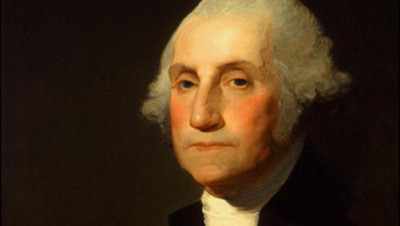
  1. George Washington (1789 and 1792): George Washington, the nation's first president, ran as an independent candidate, unaffiliated with any political party. His unanimous election in 1789 and subsequent victory in 1792 set a precedent for independent leadership.

"I hope I shall possess firmness and virtue enough to maintain what I consider the most enviable of all titles, the character of an honest man." — George Washington.

  1. Ross Perot (1992): Ross Perot, a self-made billionaire, ran as an independent candidate in the 1992 presidential election. He focused on issues such as reducing the national debt, government reform, and trade.

"The budget should be balanced, the treasury should be refilled, the public debt should be reduced and the arrogance of public officials should be controlled." — Ross Perot.

  1. Bernie Sanders (2016 and 2020): Bernie Sanders primarily identifies as a Democratic Socialist and has served as an Independent U.S. Senator from Vermont.

"It is time we had democratic socialism for working families, not just Wall Street billionaires." — Bernie Sanders.

Relevance and Influence:

Independent candidates often serve as a reminder of the importance of alternative voices in American politics. While they may not always win elections, their campaigns can push major parties to address pressing issues and adopt new policies.

Independent candidates have a long and storied history in American politics. They challenge the status quo, bring unique perspectives to the national conversation, and sometimes achieve significant electoral success. While the road to victory as an independent candidate can be challenging, their campaigns often leave a lasting impact on the political landscape and the policies pursued by major parties.

Wednesday, May 22, 2024

The Cato Institute: Advancing Libertarianism and Limited Government


The Cato Institute, founded in 1977, is a prominent libertarian think tank and research organization that has been influential in promoting principles of limited government, individual liberty, and free-market economics in the United States. Named after Cato's Letters, a series of 18th-century British essays that inspired American revolutionary thinking, the institute continues to shape public policy discussions and advocate for libertarian ideals. In this article, we will explore the organization's history, founders, prominent figures, goals, and notable accomplishments.

Founders and Early History:

The Cato Institute www.cato.org was founded by Charles Koch, Edward H. Crane, and Murray Rothbard. Charles Koch, a successful businessman and philanthropist, shared a deep commitment to the principles of classical liberalism, as did Edward H. Crane and Murray Rothbard. They aimed to create an organization dedicated to advancing libertarian philosophy and influencing public policy.

Prominent Figures:

  1. Edward H. Crane: Edward H. Crane played a pivotal role as one of the co-founders of the Cato Institute and served as its president for many years. He was instrumental in establishing the institute's vision and organizational structure.

  2. David Boaz: David Boaz, the executive vice president of the Cato Institute, is a prominent libertarian thinker and author, known for his work on individual liberty, limited government, and libertarianism.

  3. Robert A. Levy: Robert A. Levy served as the chairman of the Cato Institute and is a distinguished constitutional scholar who has been influential in advocating for individual rights and freedoms.

Goals and Mission:

The Cato Institute's mission is to promote principles of individual liberty, limited government, free markets, and the rule of law. The key goals and principles of the institute include:

  • Advocating for a reduction in government intervention in the economy and society, emphasizing individual rights and freedoms.
  • Promoting free-market capitalism and economic freedom as engines of prosperity.
  • Defending civil liberties, including freedom of speech, privacy, and the right to bear arms.
  • Advocating for non-interventionist foreign policy and a more restrained use of military force.

Prominent Accomplishments:

The Cato Institute has achieved several notable accomplishments, including:

  1. Impact on Policy Debates: The institute has played a significant role in shaping policy discussions on a variety of issues, including healthcare, tax reform, and criminal justice reform.

  2. Supreme Court Cases: The Cato Institute has filed numerous amicus curiae briefs in Supreme Court cases, advocating for constitutional interpretation that emphasizes individual liberty and limited government.

  3. Global Influence: The institute has expanded its reach through international partnerships and initiatives to promote libertarian principles and advocate for limited government in other countries.

  4. Publication of Research: The Cato Institute consistently produces a wide range of publications, including books, policy reports, and articles, that provide insights into libertarian philosophy, economics, and public policy.

The Cato Institute, named after the classical liberal Cato's Letters, has emerged as a leading force in advancing libertarian principles in the United States and beyond. With a dedication to limited government, individual liberty, and free-market capitalism, the organization has played a crucial role in shaping public policy discussions and advocating for a more libertarian approach to governance. Its work in numerous areas, including economic policy, civil liberties, and foreign policy, has left a lasting impact on American politics and policy.

Monday, May 20, 2024

#1 Hit Video Short from the Week of 05/12/2024


Bastiat's concept of the broken window fallacy challenges the idea that wealth can be created by government spending. The best government can do is redistribute wealth, destroying as much wealth as it purports to create.

Friday, May 17, 2024

The American Spectator: Where Bold Perspectives Spark Intellectual Fireworks


In the grand carnival of conservative thought, one publication has been igniting intellectual fireworks for decades - "The American Spectator." Founded in 1924 and revitalized in the 1960s by R. Emmett Tyrrell Jr., this magazine has been a lively and unapologetic voice in the conservative arena, challenging norms, and injecting a dose of irreverence into political discourse.

Revival and Renaissance:

The American Spectator experienced a revival in the 1960s under the leadership of R. Emmett Tyrrell Jr. With a mission to provide an alternative to what Tyrrell saw as a liberal-dominated media landscape, the magazine embraced its role as a provocateur, a standard-bearer for conservative thought that refuses to be confined by convention.

Embracing Irreverence:

The hallmark of The American Spectator is its irreverent approach to serious topics. Politics, culture, and society are dissected not with solemnity, but with a mischievous glint in the eye. The magazine takes a delightfully cheeky approach to critique, turning what could be dry analysis into a rollicking exploration of ideas.

Prominent Satirists and Wordsmiths:

The American Spectator has been graced by the wit and wisdom of prominent satirists and wordsmiths. P.J. O'Rourke, a humorist extraordinaire, served as the magazine's editor-in-chief, infusing its pages with a unique blend of insight and comedic flair. His contributions turned political analysis into an art form that not only informs but entertains.

Scandals and Investigations:

The American Spectator is no stranger to controversy. In the 1990s, it gained attention for its investigative reporting on the Clinton administration, delving into scandals with a fearless pursuit of truth. The magazine's reputation for cutting through the political fog solidified during this period, showcasing its commitment to holding power accountable.

A Forum for Conservative Thought:

More than just a magazine, The American Spectator has been a forum for conservative thought where ideas are explored with vigor. It's a space where writers and thinkers, unafraid of challenging the status quo, come together to engage in spirited discussions about the direction of conservative ideology.

Legacy and Continued Impact:

As The American Spectator continues to evolve in the digital age, its legacy endures. The irreverence, the sharp wit, and the commitment to conservative principles remain at the forefront. In a landscape often dominated by solemnity, this magazine stands as a reminder that serious ideas need not be delivered with a somber tone.

The American Spectator is not just a spectator; it is a participant, an instigator, and a lively force in the world of conservative journalism. Its pages are not just filled with words; they crackle with energy, inviting readers to engage in a dynamic conversation about the ideas that shape our world. In a political arena that can sometimes take itself too seriously, The American Spectator is a breath of fresh air, reminding us that, even in the pursuit of serious thought, a bit of irreverence can go a long way.

ARE YOU A CONSCIOUS CONSERVATIVE?

  You may be A Conscious Conservative if you believe: No person or government has a right to take or use a person's property without t...